
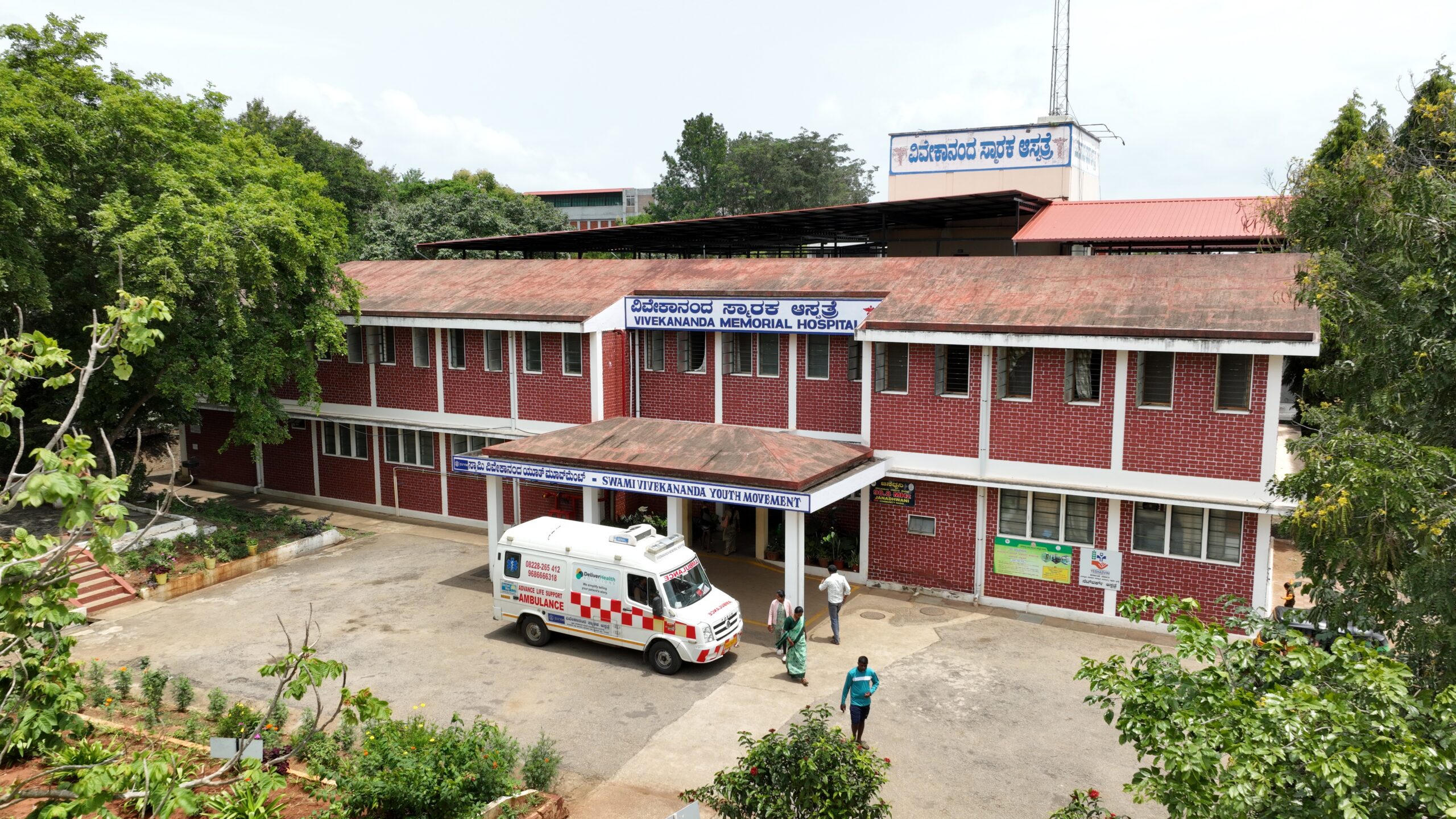
Vivekananda Memorial Hospital
Equitable, accessible and affordable secondary health care for rural and tribal communities.
Our Objective
Equitable, ethical, empathetic and evidence-based secondary health care that is holistic, high-quality and affordable for rural and tribal communities.
Vivekananda Memorial Hospital
Established by Swami Vivekananda Youth Movement in 1998, VMH is a 100-bed multispecialty rural hospital at Saragur, serving nearly four lakh people across H.D. Kote and neighbouring taluks through patient-centred secondary care.
Read more about VMH
VMH is more than a rural hospital. It represents SVYM's long-term effort to make quality health care accessible in geographies where distance, affordability and social disadvantage can otherwise determine health outcomes. Its journey brings together clinical care, community health, local capacity, learning and research.
To provide equitable, ethical, empathetic and evidence-based secondary health care that is holistic, high-quality and affordable for rural and tribal communities—while strengthening patient experience, safety and quality, staff capabilities, community health, medical education and research.
From a rural hospital to a health-care ecosystem
Established in 1998 at Saragur, VMH was created to improve access to secondary health care for rural and indigenous tribal communities in H.D. Kote and surrounding areas. Over time, it has evolved into a 100-bed multispecialty institution with 24×7 emergency care, critical-care support, diagnostics, surgery, maternal and newborn care, rehabilitation, Allopathy and Ayurveda.
Its evolution has been shaped by the needs of the communities it serves. Hospital-based treatment is connected with outreach, grassroots health workers, mobile health services, national health programmes and Government systems—creating continuity between the home, the community and the hospital.
Health care aligned with SVYM's development vision
SVYM sees health not only as the treatment of illness, but as an essential component of human capability. VMH therefore reflects the organisation's larger purpose of building the human and social capital of communities through accessible care, local ownership and stronger systems.
Equity before geography
Bringing quality secondary and specialist care closer to rural and tribal families who would otherwise travel to cities.
Community + institution
Connecting hospital care with outreach, referrals, public health programmes and community-level follow-up.
Affordability with dignity
Ethical and rational care, supported where required through the Yogakshema Poor Patient Fund and partnerships.
Capacity from within
Developing local health workers, rural youth, nurses, students and professionals so communities gain lasting capabilities.
Distinctive features and institutional milestones
Across its journey, VMH has developed several features that distinguish it as a rural health institution. Historical milestones documented by SVYM include:
- First and only hospital in rural Mysuru to receive NABH accreditation for quality of patient care.
- India's first rural blood storage centre, operational since 2004, strengthening access to emergency and obstetric care.
- First primary-health-care-level intervention for Prevention of Parent-to-Child Transmission (PPTCT).
- First-of-its-kind Government–NGO partnership for free antiretroviral treatment at Government Medical College premises in Mysuru.
- ICTC, Link ART Plus and tuberculosis diagnostic services integrated into rural secondary care.
- Newborn hearing screening and outreach linkage with the All India Institute of Speech and Hearing, Mysuru.
- Home- and institution-based palliative care as part of a wider continuum of care.
- Advanced diagnostic and therapeutic services adapted to a rural setting, alongside expanding specialist and superspecialist access.
A platform for health systems, learning and research
VMH's value extends beyond the patients who enter the hospital. Its longstanding relationship with rural and tribal communities makes it a practical setting for understanding how health systems work in resource-constrained contexts, how community and institutional care can complement each other, and how evidence can be generated from real-world settings.
Development practitioners
Explore a model where health care connects with community participation, local capacity and social development.
Universal health-care practitioners
See how outreach, referrals, affordable secondary care and Government systems can work as a continuum.
Students & interns
Gain exposure to rural medicine, public health, allied health, rehabilitation and community-based care.
Researchers
Engage with a field setting for scientifically rigorous, ethically grounded research on context-specific health priorities.
In FY 2025–26, VMH hosted hundreds of medical, physiotherapy, postgraduate, public-health and other interns and exposure participants while continuing community-based research including the HeLTI–EINSTEIN study. This combination of service, learning and evidence generation allows VMH to contribute to the wider conversation on equitable health care—not only as a service provider, but as a living rural health institution.
VMH at a glance
A snapshot of health-care services delivered during FY 2025–26.
Growing access to care, year after year
Over five years, outpatient visits at VMH have risen from 39,495 in 2021–22 to 65,167 in 2025–26 — reflecting growing utilisation of accessible secondary care by rural and tribal communities.
2021–22
2022–23
2023–24
2024–25
2025–26
Annual outpatient visit figures are shown for FY 2021–22 to FY 2025–26.
Making quality care closer to home
VMH functions as a referral centre for rural and tribal communities, while complementing community-based health programmes and major National Health Programmes.
- 24/7 emergency and critical care support
- Multispecialty outpatient, inpatient and surgical services
- Maternal, newborn and paediatric care
- Diagnostics, rehabilitation and specialist consultations
- Allopathy and Ayurveda in a patient-centred model
Care connected to community
Hospital-based treatment is linked with outreach, referrals, public-health programmes and community-level follow-up so that care does not begin or end at the hospital door.
Building Human & Social Capital
Health care that strengthens the capabilities of individuals, families and communities.
Family-Centred Approach
Care that recognises families as partners in healing, continuity and wellbeing.
Local Ownership
Engaging and employing local people to strengthen trust, participation and access.
A continuum of care under one rural health system
Emergency & Critical Care
Round-the-clock emergency support, HDU care, Code Blue preparedness and mass-casualty readiness.
Medicine & Surgery
Affordable secondary care with general and specialist surgical services, including expanded spine-care access.
Maternal & Newborn Care
Antenatal, obstetric, delivery and newborn services linked to community-based maternal health programmes.
Diagnostics
Laboratory, imaging, ultrasound, endoscopy and other diagnostic services strengthened by improved reporting systems.
Specialty OPDs
Regular access to orthopaedic, ophthalmology, dentistry and superspecialty consultations for rural communities.
Rehabilitation & Hearing Care
Rehabilitation support and affordable assistive solutions, including hearing aids for rural and tribal patients.
Strengthening quality, access and preparedness
Growth in outpatient footfalls
Greater utilisation of hospital services during the year.
Increase in surgical load
Improved access to advanced surgical care, including spine surgery.
Increase in NICU utilisation
Expanded access to specialised neonatal care.
People supported with hearing aids
Affordable hearing solutions improving everyday participation and wellbeing.
Expanded specialist and superspecialty access
Regular superspecialty outpatient consultations and spine surgery camps extended affordable access to advanced care.
Improving diagnostic reliability
A laboratory interface system was introduced to reduce reporting errors and strengthen continuity of care.
Stronger teams, safer systems
Clinical teams were strengthened and staff capacity enhanced through fire safety, mass-casualty and Code Blue drills.
A rural platform for learning, training and evidence
VMH functions not only as a hospital, but as a learning environment where clinical practice, rural-health exposure, workforce development and context-relevant research come together.
Academics & Training
VMH combines clinical exposure with community context for medical, allied-health and rural health-care learners.
Participants through internships and exposure visits
Participants in academic programmes
Participants certified in BCLS
CME / CNE / CPD sessions
Research
VMH's longstanding engagement with rural and tribal communities supports scientifically rigorous, ethically grounded research focused on real health priorities.
The ongoing HeLTI–EINSTEIN study is one example of VMH's role in longitudinal community-based research and preventive health.
Help make timely care possible for a family in need
The Yogakshema Poor Patient Fund brings together support from SVYM staff, communities and donors to help deserving families access hospital care when cost becomes a barrier.
Stand with families when care cannot wait
Your support helps make ethical, affordable secondary health care accessible to rural and tribal families while strengthening the wider health system around them.
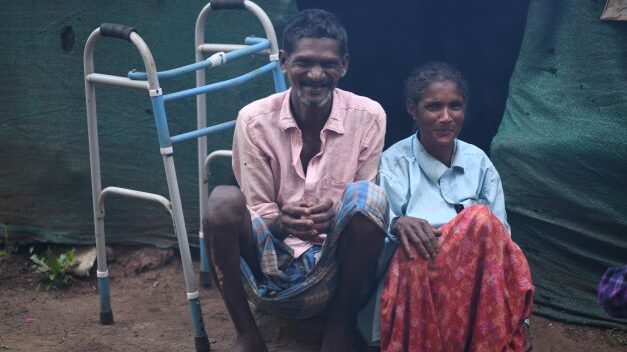
Support essential medical care for rural & tribal communities
Support marginalized families receive subsidized medical care at SVYM’s Vivekananda Memorial Hospital by contributing to the hospital’s ‘Poor Patient Fund’.