
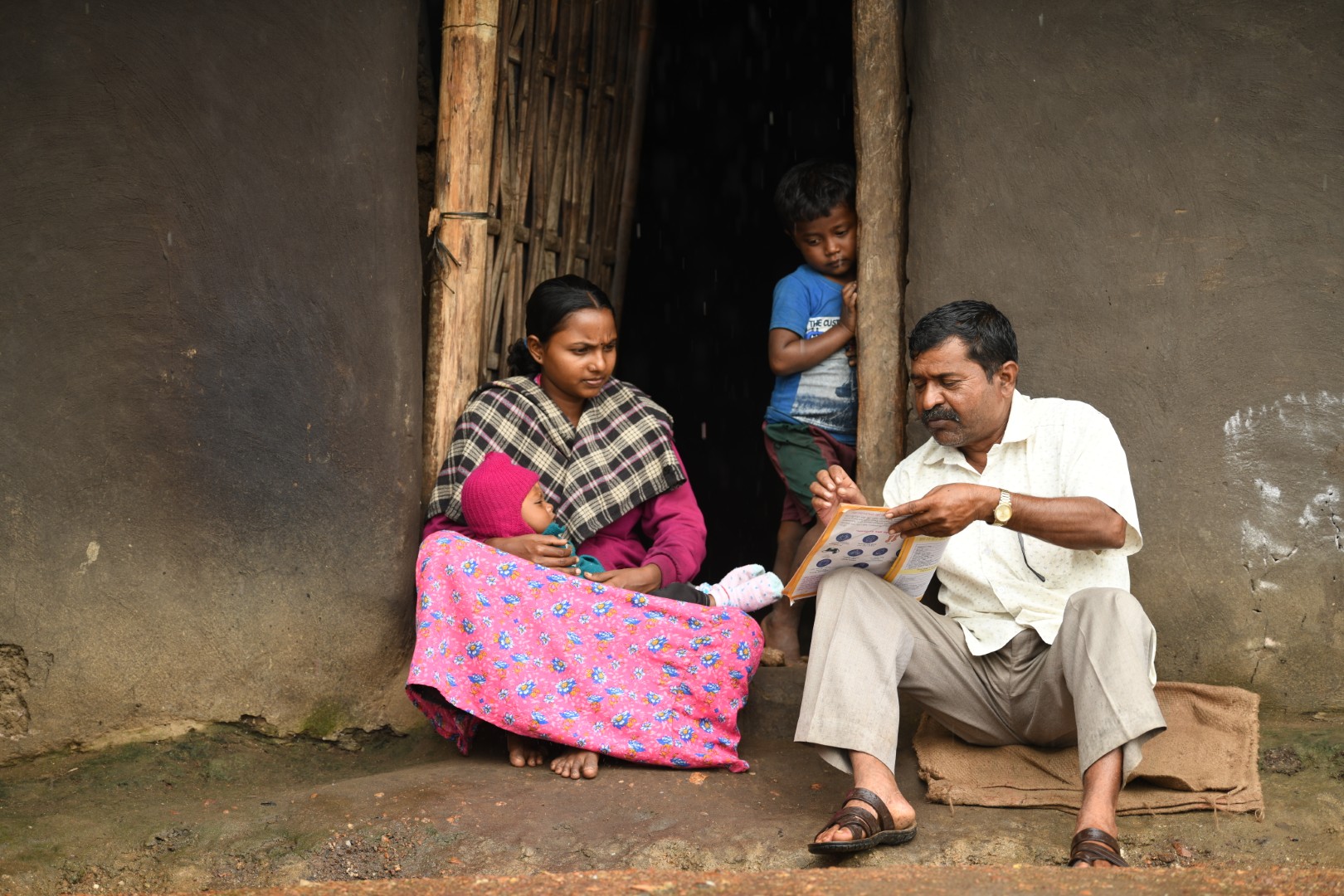
Safe motherhood. Strong beginnings.
Reproductive, Maternal, Newborn, Child & Adolescent Health (RMNCH+A) — one of SVYM's earliest flagship community health programmes, helping women in remote tribal communities move through pregnancy, childbirth and early motherhood with timely care, trusted support and stronger links to the public health system.
Objective
To improve maternal, newborn, child and adolescent health through early identification of risk, continuous antenatal and postnatal care, safe institutional delivery, community participation and stronger convergence with Government and other health institutions.
Nearly three decades of walking with mothers and families
Initiated in 1997 in H.D. Kote, the programme grew from a reproductive and child-health initiative into an RMNCH+A lifecycle approach aligned with the National Health Mission. Its strength lies in connecting care delivered in the community with the Mobile Health Unit, Vivekananda Memorial Hospital, Government hospitals, primary health centres and other referral institutions.
Read more about the programme's evolution
The challenge at the beginning
When SVYM began its maternal and newborn work in 1997, an early baseline recorded that roughly 95% of pregnant women in the indigenous tribal communities being served delivered at home. Anaemia, pregnancy-induced hypertension, distance from health facilities and delayed care could turn childbirth into a serious risk for both mother and baby.
The model that evolved
SVYM responded not by replacing the public health system, but by connecting families to it. Antenatal follow-up, community health facilitators, mobile diagnostics, high-risk pregnancy identification, institutional delivery, postnatal care and newborn follow-up became complementary parts of one continuum.
Building human and social capital
Health capability: women and families gain information, earlier risk identification and greater confidence in seeking timely care.
Family support: husbands, mothers-in-law and caregivers become partners in nutrition, follow-up, referral and safe delivery.
Community trust: repeated contact with health facilitators reduces fear and makes institutional health care more familiar and acceptable.
System connection: Government hospitals, PHCs, VMH, ASHA workers and referral services work together around the needs of the mother and newborn.
Why maternal health is foundational
Protecting the health of a mother and newborn safeguards the earliest layer of human capital — survival, nutrition, healthy development and a stronger beginning for the next generation.
Programme initiated in H.D. Kote; early programme documentation recorded home delivery as the prevailing norm in the communities reached.
98% institutional deliveries among registered tribal women; 467 women with high-risk pregnancies supported; zero maternal mortality reported for the year.
98.1% institutional delivery rate and zero maternal deaths reported; the programme covered 453 tribal hamlets across 10 taluks.
242 women with high-risk pregnancies identified early and enrolled for follow-up; 91% institutional delivery rate among registered women.
Historical figures reflect different programme periods, geographies and denominators and are presented as milestones, not as a directly comparable time series.
Keeping mothers connected to care
During 2025–26, the programme sustained essential maternal and child-health services across six taluks despite limited funding, using the Mobile Health Unit and community-based care to maintain early identification, follow-up and referral.
Public-system utilisation: 69% of deliveries among registered women took place in public health institutions during 2025–26, reflecting the programme's emphasis on strengthening access to existing Government health systems rather than creating parallel pathways.
Care begins before delivery — and continues after it
The programme is organised around a lifecycle rather than a single clinical event. Early registration, risk identification, repeated follow-up, safe delivery and postnatal care work together to protect both mother and newborn.
Early registration
Identify pregnancies early, issue RCH IDs and connect women with antenatal services.
Antenatal care
Track blood pressure, haemoglobin, nutrition, fetal wellbeing and other pregnancy risks.
High-risk follow-up
Identify complications early and create a referral and delivery plan before an emergency develops.
Safe delivery
Facilitate institutional delivery through Government hospitals, VMH and other appropriate facilities.
Postnatal & newborn care
Continue follow-up after birth through home visits, counselling, immunisation linkages and newborn support.
The critical idea: do not wait for an emergency
A high-risk pregnancy identified during a routine home or community visit creates time — time to counsel the family, arrange referral, select the appropriate institution and prevent delay when labour begins.
Finding risk early changes the course of care
Anaemia, hypertension and other maternal risks can remain hidden until they become serious. The programme therefore places strong emphasis on screening, repeated follow-up and planned institutional care.
242 high-risk pregnancies followed in 2025–26
High-risk pregnancies represented 32.4% of eligible pregnancies registered during the year. Women identified as high risk were enrolled for follow-up so that clinical monitoring, referral and delivery planning could happen before complications became emergencies.
During 2024–25, the programme also reported screening 897 antenatal women for anaemia, identifying 15 women with severe anaemia and facilitating treatment for all of them.
What continuity makes possible
Risk screening is useful only when it connects to treatment. The programme combines community follow-up with PHCs, Government hospitals, VMH, diagnostic support and referral so that clinical findings lead to action.
A safe birth is a shared outcome
Maternal health improves when a woman is surrounded by a functioning network — her family, a trusted community health facilitator, ASHA workers, the Mobile Health Unit, PHCs, hospitals, transport and referral systems.
Community health facilitators
Regular home and village contact helps maintain antenatal follow-up, monitor risk and build trust with women who may live far from formal facilities.
Families as partners
Husbands, mothers-in-law and caregivers influence nutrition, transport, care-seeking and the decision to choose institutional delivery.
ASHA & Government systems
Working with frontline public-health workers strengthens access to RCH registration, Government schemes, PHCs and institutional delivery.
Mobile Health Unit
The MHU extends clinical follow-up closer to remote communities and helps connect mothers to higher levels of care.
Mother Care technology
Portable and solar-powered equipment allows blood pressure, haemoglobin, fetal heart rate and other key checks to be performed closer to home.
Institutional referral
VMH, Government hospitals and other appropriate facilities provide the delivery and specialist care needed when risk cannot be managed in the community.
Community participation is part of clinical quality. Awareness sessions, baby-shower programmes, mothers' meetings and village-level engagement create spaces where risk, nutrition, institutional delivery and newborn care can be discussed before a crisis occurs.
Many mothers. Many moments. One continuum of care.
The carousel is designed to hold around ten stories. It currently combines verified individual narratives with documented programme moments; additional beneficiary stories can be substituted as they are prepared for public use.
Then and now — a mother's experience
Suma's first child had been delivered at home, continuing a family history of home births. Fifteen years later, pregnant again at 32, repeated check-ups, scans, home visits and the family's growing trust in VMH led her to choose institutional delivery. She gave birth to a healthy boy at Vivekananda Memorial Hospital.
Reaching a mother-to-be inside a coffee estate
Sunitha lived in a small settlement near Virajpet. An SVYM health facilitator travelled by motorcycle for regular follow-up, checking blood pressure, haemoglobin and the fetal heartbeat. Working with ASHA workers helped the team maintain access and continuity even when private estate boundaries made outreach difficult.
Care across the barricades
During lockdown, some tribal hamlets barricaded roads to protect themselves from COVID-19. Pregnant women were asked to meet the health team at the barricades so routine checks could continue. Portable Mother Care Kits helped identify high-risk pregnancies and maintain referral when normal travel to hospitals was disrupted.
From home delivery as the norm to institutional care
Programme documentation from 1997 recorded roughly 95% home delivery among the tribal women then being reached. By 2021, hospital delivery had become the overwhelming norm among registered women — a shift built gradually through trust, awareness, referral and repeated contact.
467 pregnancies that could not be left to chance
In 2021–22, 467 women identified with high-risk pregnancies were supported for safe delivery. The year recorded 98% institutional deliveries among registered tribal women and zero maternal mortality — illustrating the value of identifying risk before labour begins.
A clinic that can travel
A portable solar-powered Mother Care Kit brought fetal Doppler, blood-pressure measurement, haemoglobin testing, glucose testing and other basic assessments closer to remote homes. During COVID-19, it allowed essential checks to continue when hospital access was severely constrained.
Baby showers become spaces for maternal health
In 2024–25, 56 baby-shower programmes engaged 223 antenatal mothers and more than 1,500 community members. Familiar community gatherings became opportunities to discuss timely ANC, nutrition, safe delivery and family support.
Finding severe anaemia before delivery
In 2024–25, 897 antenatal women were screened; 15 were identified with severe anaemia and all were facilitated for treatment. The significance lies not only in screening, but in ensuring an abnormal result leads to care.
When Government hospitals become the preferred pathway
In 2024–25, 74% of reported deliveries took place in Government hospitals. In 2025–26, 69% of deliveries among registered women were again in public institutions — showing the programme's role as a bridge into the health system, not a substitute for it.
242 high-risk pregnancies, identified early
During 2025–26, 242 women with high-risk pregnancies — 32.4% of eligible pregnancies — were identified and enrolled for follow-up. Each early identification created an opportunity to counsel the family, plan referral and reduce delay.
Editorial note: individual names should be used only when SVYM has appropriate consent for public storytelling. The carousel can accommodate additional stories without changing the layout.
Support the continuum — not just a single intervention
Safe motherhood in remote communities depends on continuity: the health facilitator who reaches a home, the screening that identifies risk, the transport and referral that connect a mother to care, and the follow-up that continues after birth. Institutional partners can help sustain this chain.
Community health facilitators
Support regular field contact, counselling, tracking, follow-up and coordination with families and frontline public-health workers.
Mobile diagnostics & screening
Enable point-of-care maternal screening, Mother Care Kits and timely identification of high-risk conditions.
Referral & transport
Strengthen timely movement from remote communities to the appropriate institution when higher-level care is required.
High-risk pregnancy follow-up
Support repeated monitoring, birth planning and clinical coordination for women identified with maternal risk.
Postnatal & newborn care
Extend the continuum beyond delivery through home follow-up, counselling, immunisation linkage and newborn support.
Community awareness & systems
Strengthen health-seeking behaviour, family participation, Government convergence, data tracking and local ownership.
A programme with a long institutional partnership history
SVYM's maternal-newborn work has previously been supported through institutional philanthropy, including a multi-year partnership with Ashraya Hastha Trust. The 2024–25 Annual Report also references an independent evaluation of the programme implemented across Mysuru, Kodagu and Chamarajanagar between 2022 and 2025.
Maternal and newborn health is connected to the wider continuum of care
Community Health Outreach
The Mobile Health Unit and grassroots outreach extend primary care, maternal follow-up and referral closer to rural and tribal communities.
Vivekananda Memorial Hospital
VMH provides maternal, newborn, emergency and specialist care as part of the institutional referral network serving rural and tribal families.
SVYM Health Sector
See how community care, institutional care, disease prevention, rehabilitation, palliative care and systems strengthening connect.
Help sustain maternal and newborn care in remote communities
Institutional partnership can help SVYM continue the field presence, screening, high-risk follow-up, referral and postnatal support that connect women in remote communities to safe, timely care.