
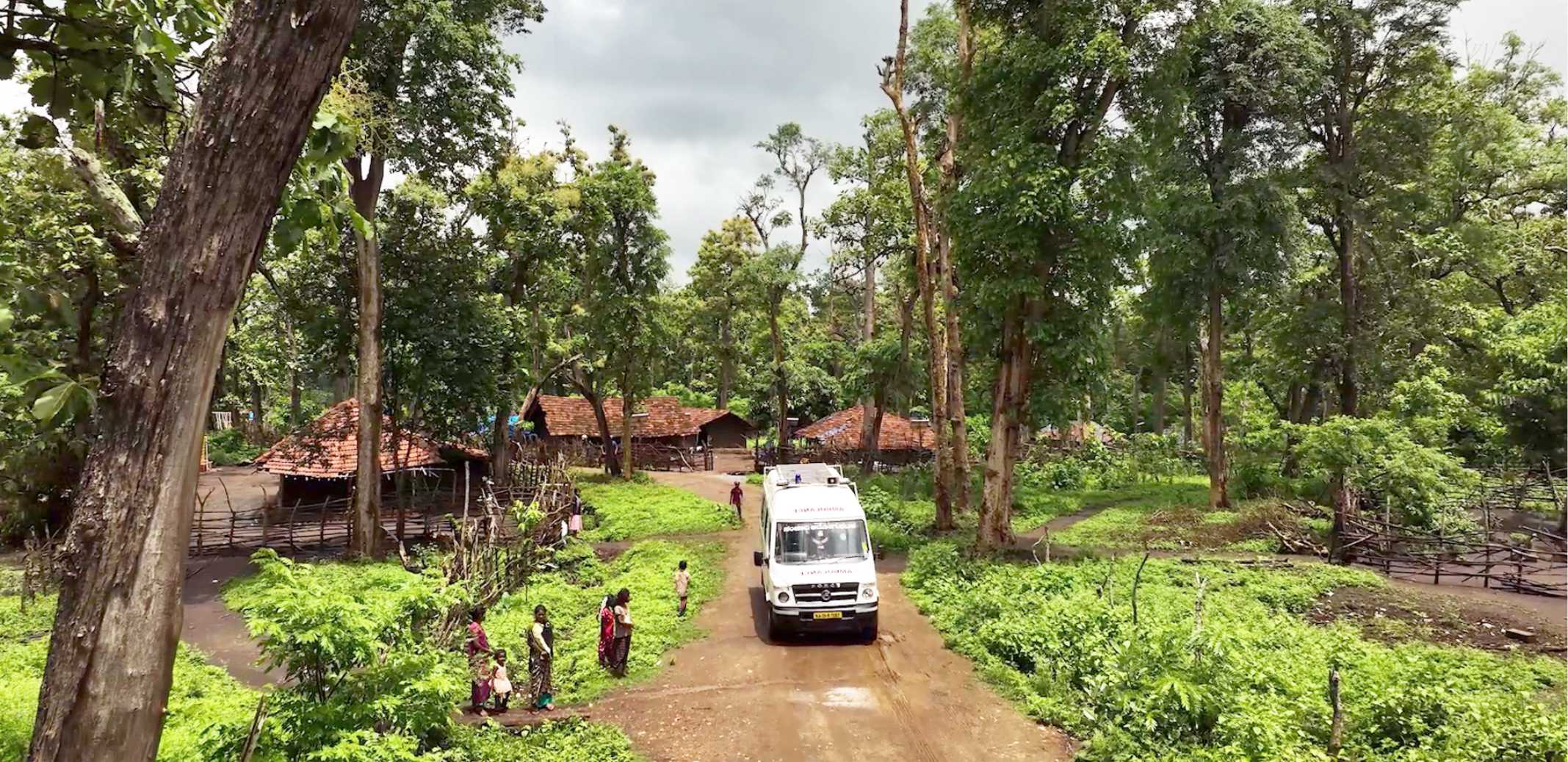
Community Health Outreach
Health care closer to home. Bringing promotive, preventive, curative, rehabilitative and palliative care closer to rural and tribal communities — and connecting people to the next level of care when they need it.
Objective
To address common health needs through a continuum of community-based care while fostering healthy behaviours, strengthening referral linkages, complementing Government health services and building local capacity for healthier communities.
Pushing health care closer to home — since 1990
SVYM's Community Health Outreach programme began in H.D. Kote and Saragur to respond to the health needs of rural and indigenous tribal communities living across remote, forest-fringe settlements. The programme combines doorstep primary care with screening, health education, home follow-up and referral to Vivekananda Memorial Hospital and Government health facilities.
Read more about the outreach approach
Why outreach matters
For a person living far from a health facility, the barrier is often not only the absence of a doctor. Travel, lost wages, delayed diagnosis, unfamiliar systems and weak follow-up can all turn manageable health conditions into larger problems. Outreach brings the first point of care closer while creating a bridge to the health system beyond the village.
From DTRA to a fuller continuum
Earlier SVYM reporting described the approach through DTRA — Diagnosis, Treatment, Referral and Awareness. The current programme retains that core while explicitly extending promotive, preventive, curative, rehabilitative and palliative care through home-, community- and institution-based services.
Building human and social capital
Health capability: awareness, healthy behaviours, early care-seeking and better understanding of risk strengthen individual and family capacity.
Community capability: volunteers, local leaders and grassroots health workers help information, follow-up and services reach people more consistently.
Institutional linkage: the MHU connects communities with VMH, Government health centres and specialist services.
Shared responsibility: families, communities, health workers and institutions each contribute to continuity of care.
Access is only the first step
The programme's deeper purpose is not simply to bring a clinic to a village. It is to ensure that a health need identified close to home can move through diagnosis, treatment, referral and follow-up without the person getting lost between levels of care.
2025–26 at a glance
The current year reflects a wider outreach footprint, stronger referral follow-through and focused screening for maternal health, tuberculosis, eye health and non-communicable diseases.
FY 2025–26 · Health Outreach for Tribal Communities, SVYM
Reach note: the programme's core Mobile Health Unit network is described as reaching 48 tribal colonies with a population of more than 8,000 people, while 2025–26 service days extended across 74 tribal and 21 non-tribal villages. These are different reach measures and are therefore presented separately.
Find early. Treat locally. Refer when needed. Follow through.
The programme works as a bridge between community-level primary care and the wider health system. Each contact is an opportunity not only to treat a current problem but also to identify risk, strengthen health-seeking behaviour and connect the person to appropriate care.
Doorstep access
The Mobile Health Unit and outreach teams take primary health services closer to people in remote settlements.
Screen & diagnose
Clinical assessment, point-of-care diagnostics and targeted screening help identify acute, chronic and high-risk conditions.
Care close to home
Common health conditions are treated locally wherever appropriate, reducing avoidable travel and delay.
Connect to institutions
People needing higher-level care are linked with VMH, Government facilities or specialist services.
Stay connected
Follow-up for mothers, children, chronic conditions and referred patients helps protect continuity of care.
Build health capability
Awareness, counselling and health education strengthen informed choices within families and communities.
Community participation
Local leaders, volunteers and health workers help organise services and encourage early care-seeking.
Work with the system
Government health services and SVYM's institutional care complement rather than duplicate each other.
A moving front door to the health system
The Mobile Health Unit is the programme's most visible platform, but its value lies in what it connects: regular primary care, maternal and child health, TB and HIV services, NCD screening, WASH education, palliative support and institutional referral.
Primary care in remote communities
The MHU serves indigenous tribal communities in H.D. Kote and Saragur, including settlements located near forest areas where travel to formal health facilities can be difficult.
Over the years, the service has responded to acute illness, hypertension, diabetes, anaemia, respiratory and skin conditions, musculoskeletal complaints, eye and ear conditions, mental-health needs and other common health concerns.
Continuity, not an occasional camp
Earlier annual reports record more than 300 operating days in a year, illustrating that the outreach model is built around repeated presence and follow-up rather than one-time medical camps alone.
Closer to home, connected to hospital care
When the MHU identifies a condition that needs specialist or institutional care, the patient is connected onward. Vivekananda Memorial Hospital in Saragur acts as an important referral hub, while Government facilities provide additional primary, secondary and tertiary pathways.
Following care through critical stages of life
Maternal and child health is strengthened when care is repeated, timely and connected — from antenatal visits and high-risk identification to postnatal follow-up, child health and institutional referral.
Antenatal care
Regular contact helps identify anaemia, high-risk pregnancies and other concerns earlier, while counselling supports safer pregnancy and birth planning.
Postnatal follow-up
Home and outreach follow-up extends care beyond delivery to the health of the mother and newborn.
Child health
Growth, nutrition, immunisation linkage and illness management support healthier early childhood development.
In 2025–26, 2,977 follow-up visits were conducted for antenatal care, postnatal care and child health.
Screening matters when it leads to care
The programme increasingly measures not only whether people were screened, but whether those who needed further care actually reached diagnosis, treatment and referral services.
Referral completion as a quality measure
The programme reported 100% referral completion for 134 patients referred through the MHU for secondary and tertiary care in 2025–26.
Across wider outreach camps, 1,406 of 2,099 referred patients completed referral, a reported completion rate of 70%.
TB care as a continuum
Timely diagnosis, referral, follow-up and treatment support contributed to a reported 87.5% TB treatment success rate among programme participants in 2025–26.
From screening to restored vision
Eye camps illustrate the value of a complete referral chain: identify people in the community, diagnose conditions, connect them to appropriate care and follow the outcome.
Outcomes beyond surgery numbers
SVYM reported that 99% of cataract-surgery patients achieved good aided vision and 90% achieved good unaided vision, using the reported standard of visual acuity of 6/12 or better.
Diabetic retinopathy
108 cases were identified through screening, with 100% successfully linked to advanced retinal care.
Stronger community health needs more than a mobile clinic
The outreach programme works because clinical care is supported by family participation, community engagement, local health workers, referral institutions and the Government health system.
Health education
Awareness on hygiene, nutrition, communicable disease, chronic disease and maternal-child health helps people act earlier and make informed health choices.
Local leadership
Volunteers, community members and grassroots health workers help mobilise camps, follow up families and build trust around care.
Government partnership
Public health facilities, frontline systems and National Health Programmes are part of the referral and treatment network rather than separate from it.
Building health capability within the community
The long-term goal is not dependence on an outreach vehicle. It is a community that recognises risk earlier, knows where to seek care, participates in prevention and can navigate the health system with greater confidence — supported by institutions that respond when higher levels of care are needed.
Outreach is one entry point into SVYM's continuum of care
Community Health Outreach connects naturally with institutional care, maternal health, disease-control programmes, palliative care and rehabilitation.
Vivekananda Memorial Hospital
A rural secondary-care referral hub connecting community access with diagnostics, emergency, inpatient, surgical and specialist care.
Adolescent, Maternal, Newborn & Child Health
Continuum-based support for women, mothers, newborns, children and adolescents.
TB Prevention & Control
Awareness, early diagnosis, active case finding, treatment linkage and follow-up.
Palliative Care Program
Home- and institution-based holistic care for people with serious and life-limiting conditions and their families.
Disability & Inclusion
Therapy, assistive support, caregiver capability and pathways towards function, participation and self-reliance.
SVYM Health
See how community care, institutions, public health, rehabilitation, palliative care and systems strengthening connect.
Help health care reach communities before distance becomes a barrier
Partner with SVYM to strengthen Mobile Health Unit services, community screening, maternal and child health, referral pathways and the local health capability that helps rural and tribal families access timely care.